
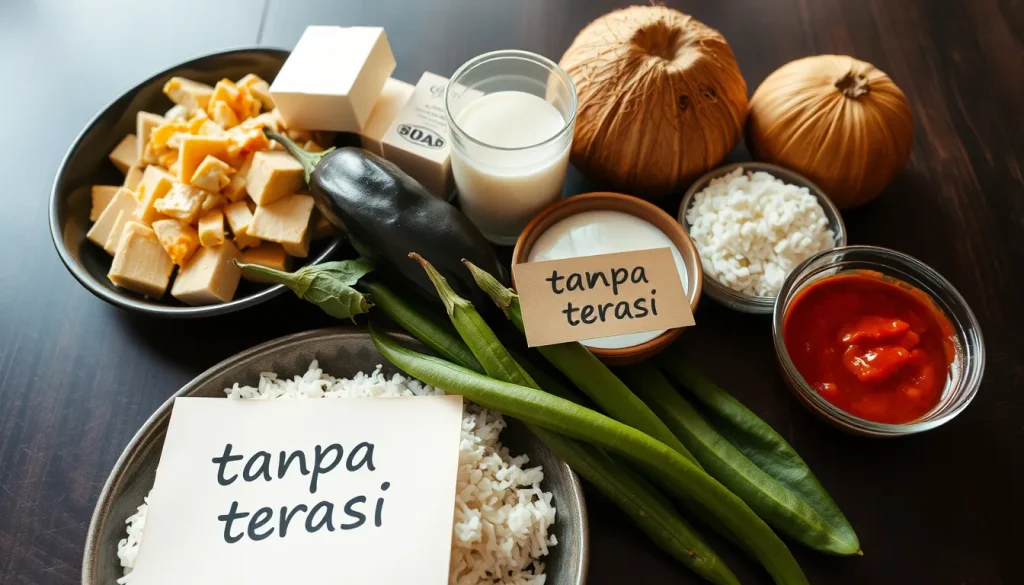
Indonesian cooking has a deep plant-based side: coconut milk, rice, tempeh, tofu, leafy greens, long beans, eggplant, and jackfruit appear across the archipelago, and Hindu Balinese and Chinese-Indonesian Buddhist communities have long maintained vegetarian traditions (Indonesia Knowledge). But everyday food is also built around meat and fish, and a dish that looks vegetarian can be seasoned with shrimp paste, cooked with meat stock, or served with egg. For a visitor, the useful question is not only ‘Is this vegetarian?’ but ‘What is in it, and how is it prepared?’
Start with the ingredients, not the label
‘Vegetarian’ is not a standardized menu term in Indonesia. A cook may understand it as ‘no meat’ while still using fish sauce, shrimp paste, or chicken stock. The most reliable method is to name the ingredients you avoid and ask whether they are present. This is especially important for strict vegetarians and vegans, and for anyone avoiding shellfish or egg.
Several ingredients recur in savory Indonesian cooking. Terasi is fermented shrimp paste, often used in sambal and some sauces. Petis is another shrimp or fish paste, associated with certain regional dishes and sauces. Kecap ikan is fish sauce; ikan asin is salted fish. Kaldu means stock or broth and may be chicken, beef, or vegetable. Telur is egg, common in fried rice, noodles, and vegetable salads. For vegan diets, also ask about susu (milk), mentega (butter), and madu (honey). Guides to plant-based eating in Indonesia repeatedly flag shrimp paste and similar seasonings as hidden ingredients (Fun with Indonesian).
The main preparation questions
The following questions cover the most common gaps between a vegetarian-looking dish and a vegetarian one. Use them together rather than relying on one phrase.
| What to ask | Indonesian phrase | Why it matters |
|---|---|---|
| Does this contain meat, chicken, fish, shrimp, or egg? | Apakah ada daging, ayam, ikan, udang, atau telur? | Establishes the basic boundaries. Daging can mean meat or beef, so list specific proteins. |
| Is there shrimp paste in the sambal or sauce? | Apakah ada terasi atau petis? | Terasi and petis are fermented shrimp or fish products and are easy to miss. |
| Can it be made without shrimp paste? | Bisa tanpa terasi? | Some dishes can be prepared plain; some sauces are pre-made. |
| Is the stock vegetable stock? | Apakah kuahnya dibuat dengan kaldu sayur? | Soups, stews, and vegetables may be cooked with meat or chicken stock. |
| Is it cooked separately from meat? | Apakah dimasak terpisah dari daging? | Matters if cross-contact or shared pans are a concern; this is not an allergy guarantee. |
| I am vegan; no egg, milk, butter, or honey. | Saya vegan. Tanpa telur, susu, mentega, atau madu. | States a stricter boundary; vegan is better understood in urban and tourist areas. |
For strict avoidance, ask the cook or manager, not only the server; kitchens vary.
Where hidden animal ingredients appear
Not every dish needs a long interrogation. Focus on the parts most likely to carry animal flavor.
- Sambal and sauces. Chili relishes and peanut sauces may include terasi, petis, or fish sauce. Ask whether the sauce is made in-house and whether it can be served plain.
- Soups and stews. Vegetable dishes may be simmered in chicken or beef stock. Ask about kaldu before assuming a vegetable dish is vegetarian.
- Fried rice and noodles. Nasi goreng and mie goreng often include egg, small pieces of meat, or seafood. Ask for tanpa telur (without egg) and tanpa daging (without meat) if needed.
- Vegetable salads. Gado-gado and pecel are commonly served with egg, and their peanut sauce may include shrimp paste. Ask for no egg and ask about terasi in the sauce.
- Condiments and sides. A small dish of sambal, a fried side, or a sauce can carry the ingredient you are avoiding. Confirm the whole plate, not just the main dish.
Dishes to look for, and what to confirm
Some Indonesian dishes are naturally close to vegetarian, but ‘close’ is not the same as confirmed. The following are common starting points.
- Sayur lodeh: vegetables in coconut milk; confirm the stock and whether shrimp paste is used.
- Tempe orek or tahu goreng: tempeh or tofu dishes. Tempeh and tofu are everyday plant proteins, especially in Java, where they often replace meat in daily meals (Backindo). Confirm egg, stock, and sauce.
- Gado-gado: vegetable salad with peanut sauce; often served with egg. Ask for no egg and ask about terasi in the sauce.
- Nasi goreng sayur or mie goreng sayur: vegetable fried rice or noodles; often cooked with egg and small meat pieces, so specify.
- Urap: steamed vegetables with grated coconut; usually plant-based, but confirm the seasoning and any stock.
Balinese and Chinese-Indonesian vegetarian traditions, plus modern vegan cafes in Bali and Jakarta, offer more reliable choices; outside these niches, simple vegetable, tempeh, and tofu dishes are often the most adaptable (Indonesia Knowledge).
How to order at a warung or restaurant
A warung is a small local eatery, often with a limited menu and a cook who can change a dish on request. A rumah makan is a more formal restaurant. At a warung, point to the dish and use the ingredient questions. At a restaurant, ask for the person who knows the recipe if the server is unsure.
If you are vegan, say so directly and list the foods you avoid. ‘Vegetarian’ may still include egg or fish in some kitchens, so it is safer to state each boundary. In Bali and Jakarta, staff in vegan-oriented cafes may understand ‘vegan’ immediately; in smaller towns, the specific ingredient list is more useful (Indonesia Knowledge).
For shared buffets or nasi campur (mixed rice), ask which dishes are vegetarian and whether separate serving spoons are used. If cross-contact matters, choose dishes served fresh from the kitchen rather than from a mixed display. No article can guarantee a kitchen’s practice; confirm with the staff.
A simple ordering sequence
- Show or say: ‘Saya vegetarian. Saya tidak makan daging, ayam, ikan, atau udang.’ Add telur if you avoid egg.
- Ask about the specific dish: ‘Apakah ada daging, ayam, ikan, udang, atau telur?’
- Ask about seasonings: ‘Apakah ada terasi atau petis?’ Then ask ‘Bisa tanpa terasi?’
- Ask about stock: ‘Apakah kuahnya dibuat dengan kaldu sayur?’
- If needed, ask about cooking separately: ‘Apakah dimasak terpisah dari daging?’
- Confirm the final plate when it arrives, especially if it includes sauce, sambal, or a side dish.
This sequence is not a guarantee against hidden ingredients, but it turns a vague request into a set of answerable questions. It also gives the cook a clear picture of what you need.
What to confirm before you rely on a menu label
Menus may label a dish ‘vegetarian,’ ‘vegan,’ or ‘healthy’ without listing every seasoning. Ask about pre-made sauces, stock, and condiments. If you have a food allergy or a strict dietary requirement, explain it clearly and ask whether the kitchen can prevent cross-contact; if the answer is uncertain, choose a simpler dish or another establishment.
The sources used here were retrieved on 6 November 2026. They describe general patterns in Indonesian food and plant-based travel, not the practice of every warung or restaurant. Recipes vary by region, family, and cook, so the final check is always with the seller.
FAQ
Is 'vegetarian' enough to communicate my diet in Indonesia?
Not always. Many cooks understand it as no meat, but fish sauce, shrimp paste, stock, or egg may still appear. State each ingredient you avoid and ask about the specific dish.
How do I say 'no shrimp paste' in Indonesian?
Bisa tanpa terasi? means 'Can it be made without shrimp paste?' You can also ask Apakah ada terasi atau petis? ('Is there terasi or petis?').
Is tempeh always vegan?
Tempeh itself is fermented soybean, but the finished dish may be cooked with egg, meat stock, shrimp paste, or shared oil. Confirm the preparation, not just the ingredient.
Where is vegetarian food easiest to find?
Bali and Jakarta have the most developed vegetarian and vegan-friendly scenes, including cafes and dedicated menus. Elsewhere, simple tempeh, tofu, vegetable, and rice dishes are often adaptable, but ask about stock and seasonings.