Ulos is a handwoven textile of the Batak peoples of North Sumatra, Indonesia, especially associated with the Toba highlands around Lake Toba. In its most literal sense, the word can be translated as “blanket,” but in Batak society ulos is also a ceremonial cloth tied to adat, customary law and practice. Depending on its type and context, it can provide everyday warmth, serve as a gift or heirloom, mark status, or carry ritual significance.
That range is why the question “What is ulos?” has a short answer and a longer one. The short answer is a woven cloth; the longer answer is a system of kinship, ceremony, memory, and craftsmanship. A market stall may sell ulos as a souvenir, while a family may keep a particular cloth for weddings, births, or funerals. The same word covers many weaves, sizes, motifs, and levels of ritual importance.
What the word ulos means and who makes it
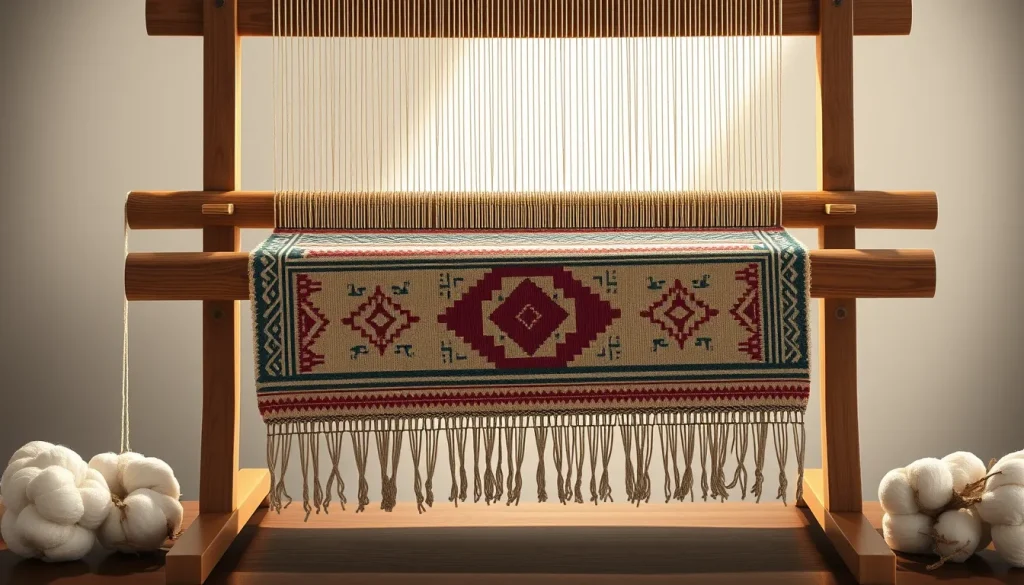
The Encyclopedia of Crafts in the WCC-Asia Pacific Region describes ulos as a traditional woven cloth of the Batak ethnic group in the Toba highlands of North Sumatra. It notes that ulos is traditionally made from cotton yarns on a backstrap loom, a body-tensioned loom in which the weaver controls tension with her or his body. The entry also describes Batak Toba ulos as an Indonesian woven textile that uses a particularly wide range of techniques.
Weaving has traditionally been women’s work in this context. Indonesia Travel’s account notes that men were traditionally prohibited from weaving because women were believed to imbue the cloth with symbolic values connected with their roles in caring for family, children, and community. That is a description of customary practice, not a rule for visitors or a claim that every workshop operates identically today.
“Batak” is also a broad identity rather than a single community. This introduction follows the Toba context most often described in English-language sources, but textile traditions and ceremonial protocols vary among Batak communities and between families. Ask which tradition a cloth belongs to rather than treating all ulos as interchangeable.
Ulos, adat, and the life cycle
Ulos is closely tied to adat, the customary law and social order that shapes many Batak ceremonies. The Encyclopedia of Crafts notes that ulos is essential in ceremonial contexts and that each type has its own meaning and specific uses, ranging from everyday wear to highly symbolic gifts. Indonesia Travel’s guide to Batak ulos describes the cloth as a symbol of blessing and cultural identity, present at significant life moments from birth and marriage to death.
The same guide explains that ulos is believed to provide warmth and protection for the wearer’s soul and to serve as a medium for prayers and blessings from ancestors. That is why the formal presentation of ulos, called mangulosi, is performed solemnly rather than casually. For an outsider, the practical point is that ulos can be both a textile and a relationship: who gives it, who receives it, and when it is worn may matter as much as the pattern.
Not every piece is sacred or ceremonial. The sources describe a spectrum from everyday use to highly symbolic gifts. A plain or everyday cloth may be used for warmth, while a named ceremonial type may be reserved for particular rites. Avoid assuming that any ulos you see for sale is either a casual scarf or a ritual object; the type and the seller’s explanation should guide you.
Main types and the example of Ragidup
There are many types of ulos. The Encyclopedia of Crafts lists Ulos Ragidup, Ragihotang, Harungguan, Bintang Maratur, Sibolang, Sitolutuho, and Sadum among the most important. These names are not decorative synonyms. They identify specific cloths with their own conventions, and a seller or curator may use them precisely.
The best-known example is Ulos Ragidup, often translated as “pattern of life.” The Encyclopedia describes it as arguably the most sacred ulos and notes that it consists of five panels: three in the middle, between two side panels. That construction is worth noticing when you see a Ragidup displayed or worn, because it helps explain why the cloth reads as a composed ceremonial object rather than a simple rectangle.
Other named types may be associated with particular ceremonial roles or social relationships. The supplied sources do not give a full ceremonial rulebook for each name, and it would be misleading to invent one. If you need to know which ulos is appropriate for a wedding, funeral, or gift, ask the family, adat leader, or cultural institution involved rather than relying on a generic list.
How ulos is woven and read
Traditional ulos is woven from cotton yarn on a backstrap loom. The tool is simple and portable, but the process is skilled: the weaver manages tension, pattern, and alignment while working, and the finished cloth may carry geometric motifs and a deliberate color scheme. Indonesia Travel notes that each piece carries philosophy through its colors and geometric motifs, and that the color philosophy is profound.
The sources do not support a single dictionary of motif meanings that applies everywhere. A motif or color may be meaningful within a particular type, family, or community, and the same visual element can be read differently in another context. For visitors, the safer approach is to ask the weaver, seller, or museum label what a specific cloth is called and what its use is, rather than assigning a universal meaning to a pattern.
Indonesia’s national intangible cultural heritage designation is one marker of ulos’s cultural importance. According to KWRI UNESCO, ulos was designated national intangible cultural heritage on 17 October 2014. The same article describes efforts to promote ulos as world cultural heritage through UNESCO. That is not the same as being inscribed on a UNESCO list, so check the current status before repeating a claim that ulos is already UNESCO-listed.
Mangulosi: giving, receiving, and wearing ulos
Mangulosi is the ceremonial presentation of ulos. Indonesia Travel describes it as a solemn act of giving, not simply a handover of fabric. The exact protocol depends on the ceremony, the relationship between giver and receiver, and the type of ulos involved. The supplied sources do not provide a universal script, so follow the host’s instructions if you are invited.
For respectful participation, dress modestly, avoid touching ceremonial cloth unless invited, and ask before taking photographs. If you are given an ulos, receive it with attention and follow the giver’s guidance about how to hold or wear it. Do not treat a ceremonial presentation as a photo opportunity or a souvenir transaction. These are general etiquette points; the specific family or community remains the authority on its own ceremony.
Regional differences and respectful assumptions
The sources used here concentrate on Batak Toba ulos, but Batak communities across North Sumatra have their own histories and textile practices. Even within the Toba highlands, families may differ in how they use ulos at life-cycle events. It is therefore better to say “ulos in this Batak Toba context” than to make a blanket statement about all Batak people.
There is also a difference between a cloth’s cultural role and its commercial life. Around Lake Toba and Samosir, ulos is sold as a souvenir and cultural emblem; KWRI UNESCO mentions Samosir as a place to find Batak-themed souvenirs. That tourism market is real, but it is not the whole story. A buyer should be able to distinguish an everyday souvenir from a named ceremonial textile, or at least ask enough questions to know what they are purchasing.
This introduction relies on published cultural descriptions rather than fieldwork with a particular weaving family, so local protocols may be more specific than the general picture given here.
Seeing and buying ulos as a visitor
If you want to see ulos with context, look for displays that identify the type, maker, and use of the cloth. A museum, cultural center, or reputable textile gallery can explain why one cloth is called Ragidup and another is not. Around Lake Toba, you may also encounter weavers, workshops, and market sellers; the quality of explanation varies, so treat labels and claims as starting points for questions.
When buying, ask about the type name, the fiber, whether the cloth is handwoven, who made it, and whether it is intended for everyday use, display, or ceremony. Ask how to care for it. If a seller identifies a piece as a ceremonial type such as Ragidup, ask what that means in their tradition and whether it is appropriate for a visitor to wear or display. Prices will vary with technique, material, size, and maker; the sources do not provide a current price benchmark, so compare calmly rather than relying on a single quoted figure.
Buying an ulos does not make you an adat participant, and wearing one does not automatically carry the same meaning it has for a Batak family. Use it with respect, credit the maker when you can, and avoid cutting up or altering a named ceremonial cloth without advice. If your interest is primarily decorative, say so; a seller may be able to point you to a suitable everyday textile instead.
What to confirm before you go
Ceremonies are not scheduled tourist performances. Before attending any event where ulos will be presented, confirm with your host whether visitors are welcome, what you should wear, whether photography is allowed, and whether a gift is expected. If you plan to buy ulos, confirm the type, fiber, handwoven status, care instructions, and intended use with the seller. For museum or cultural-center visits, check current opening hours and access details directly with the venue; the sources used here do not establish live visitor information.
The most useful next step is to treat ulos as a named textile tradition rather than a generic “Batak scarf.” Learn one type, such as Ragidup, and one term, such as mangulosi, and you will be better prepared to look, ask, and buy without flattening the culture into a souvenir.
FAQ
Is ulos just another word for a blanket?
Literally, ulos can be translated as “blanket,” but in Batak society it is a named textile tradition tied to adat. Types range from everyday cloth to ceremonial gifts, so the word covers more than a household blanket.
Has ulos been recognized by UNESCO?
According to KWRI UNESCO, ulos was designated Indonesian national intangible cultural heritage on 17 October 2014, and the article describes efforts toward UNESCO recognition. National designation is not the same as UNESCO inscription, so verify current status before stating that ulos is UNESCO-listed.
Can visitors wear or buy ulos?
Visitors can buy ulos, but should ask about the type and intended use, especially for named ceremonial cloths such as Ragidup. If you attend a ceremony, follow the host’s guidance on wearing, handling, photography, and gifts.
Why does ulos matter in Batak ceremonies?
Sources describe it as a symbol of blessing and cultural identity, used from birth and marriage to death. It is associated with warmth, protection, and ancestral blessing, and its formal presentation, mangulosi, is treated solemnly.